100 Most Dangerous Security Misconfigurations Putting UK SMEs at Risk in 2026
UK businesses face an alarming cybersecurity crisis. Statistics show 43% of them experienced a cyber breach or attack in the last 12 months, with security misconfigurations as the main culprit. The numbers paint a grim picture – 612,000 UK businesses identified cyber breaches or attacks last year.
Small businesses remain especially vulnerable to these threats. Only 14% feel ready to protect their networks and data, yet cybercriminals target 43% of their attacks specifically at small businesses. The digital world has become more dangerous rapidly. Ransomware attacks surged by 82% compared to last year.
The Real Cost of Cyber Attacks for Small Businesses in 2026
These attacks hit small business IT security where it hurts most – their bottom line. Companies lost an average of £990 to cybercrime in the past year (£1,970 when excluding zero-cost incidents). Fraud from cybersecurity breaches affected 3% of all businesses.
Our team has created a complete guide based on ground applications, red team testing, and SME incident responses. We’ve listed the 100 most dangerous security misconfigurations that cybercriminals actively exploit in 2026. Your business’s survival could depend on addressing these vulnerabilities before becoming another statistic.
Untrained Staff on Phishing and Social Engineering

Image Source: National Cyber Security Centre
Phishing attacks pose one of the biggest threats to UK SMEs today. 85% of UK businesses face email scams. The real-life impact hits hard – 60% of small businesses shut down within six months of an attack. The average cost runs over £4,000.
Phishing Training Severity
The impact of this misconfiguration is huge. 31.4% of employees in any industry fall for phishing or social engineering scams without proper training. This number jumps above 50% in energy & utilities and healthcare sectors. 77% of UK workers have never gotten any information security training from their employers.
Phishing Training Description
Attackers use phishing to trick victims into clicking harmful links, opening dangerous emails, or downloading malicious attachments. These actions let hackers steal information or infect devices with malware. Many attacks succeed because employees don’t know how to spot suspicious messages. Studies show 39% of UK SMEs – about two million businesses – haven’t given their staff any cyber security training.
Phishing Training Fix Priority
This fix needs URGENT attention. Human mistakes cause 90% of security breaches. The numbers tell a clear story – 42% of small businesses dealt with cyber attacks or breaches last year. Medium-sized businesses had it worse at 67%.
Phishing Training Suggested Fix
A detailed phishing awareness training programme should have:
- Simulated phishing campaigns that cut click rates from 31.4% to 4.8% in just one year
- Interactive lessons about email, SMS, voice, and QR code phishing tricks
- Simple steps to report suspicious messages
- Updates about new threats as they emerge
The results speak for themselves – companies see an 84% improvement in phishing defence after a year of regular training.
Reused or Weak Employee Passwords

Weak and reused passwords create a staggering security vulnerability. Over 80% of hacking-related breaches happen with weak or stolen credentials. UK SMEs still struggle with this basic security misconfiguration despite years of warnings and guidance.
Password Reuse Severity
The dangers of password reuse are massive. A shocking 53% of people use similar passwords for multiple accounts. This gives hackers master keys to their digital lives. The problem gets worse as 49% of workers reuse passwords for their work accounts and extend this risky behaviour to personal accounts. SMEs face an exploitable vulnerability that bypasses even strong security systems.
Password Reuse Description
Employees create a security risk when they use similar credentials for multiple platforms at work and home. The numbers tell a concerning story – 65% of users reuse passwords for multiple accounts. Each password gets recycled about 14 times on average. People develop this habit because of “password overload” – they simply have too many credentials to remember.
Cybercriminals use credential stuffing as their main attack method. They take stolen credentials from one breach to break into other systems. The success rate is alarming – 81% of hacking-related data breaches stem from stolen or weak passwords. This makes credential stuffing a highly effective attack vector.
Password Reuse Fix Priority
This security gap needs URGENT attention. Organisations face unnecessary risks because 21% of users still rely on compromised, weak, or duplicate passwords. The UK government has started cracking down on poor password practises.
Password Reuse Suggested Fix
Implement these protective measures immediately:
- Deploy enterprise password managers to generate and store unique, complex passwords
- Enforce minimum password length requirements (at least 16 characters)
- Implement password deny lists to prevent common or previously compromised passwords
- Enable multi-factor authentication on all critical systems
- Replace mandatory periodic password changes with breach-driven password resets
- Educate staff about the dangers of using work credentials on external websites
Modern password protection should emphasise uniqueness and length while giving users the right tools. This approach works better than outdated methods that focus only on complexity.
No MFA on Email and Cloud Accounts
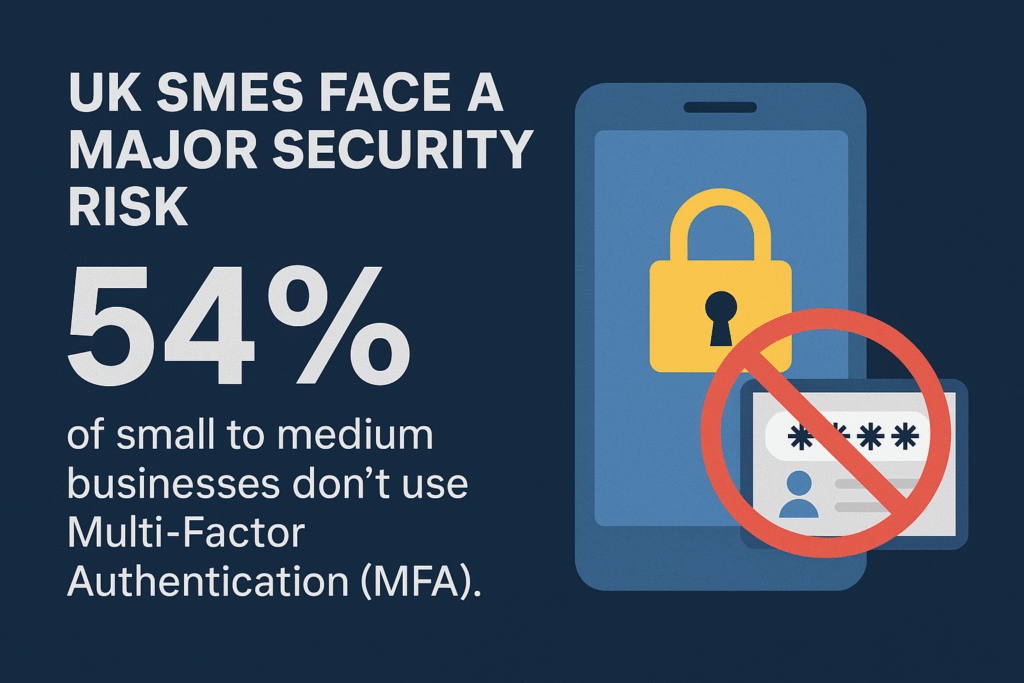
UK SMEs face a major security risk. A staggering 54% of small to medium businesses don’t use Multi-Factor Authentication (MFA). This security gap leaves companies open to account breaches, no matter how strong their passwords are.
Email MFA Severity
Missing MFA on email and cloud accounts creates a CRITICAL security risk. Microsoft’s data shows that MFA stops over 99.9% of automated cyberattacks. Companies without MFA leave themselves exposed. Once cybercriminals get passwords through phishing or data breaches, they can access sensitive communications, financial data, and company information right away. Many UK SMEs find this weakness becomes their biggest security problem.
Email MFA Description
MFA needs users to prove who they are through multiple checks before they can log in. These checks usually include something you know (password), something you have (mobile device), and sometimes something you are (biometric data). Many businesses skip MFA because they see it as too complex or worry about user convenience.
Strong passwords alone can’t protect you. When employees fall for phishing scams and give away their login details, attackers still can’t get past MFA’s extra security layers. Cybercriminals look for easy targets – companies that don’t have proper security measures.
Email MFA Fix Priority
This needs URGENT attention. Email accounts hold sensitive information and can reset passwords for other systems. Companies should add MFA right away. Those without MFA might also break data protection rules, including Cyber Essentials certification requirements.
Email MFA Suggested Fix
Add MFA to all your important systems now:
- Start with email accounts, Microsoft 365, and cloud services
- Pick the right MFA methods—FIDO/WebAuthn authentication gives you the best protection against phishing
- Use tools like Google Authenticator, Duo Security, or Microsoft Authenticator
- Write clear setup guides for your team
- Look into adaptive MFA that changes security checks based on risk
As Paul Reynolds often tells his clients during security assessments, “MFA is not just another security checkbox—it’s the strongest barrier between your business data and increasingly sophisticated attackers.”
Unsecured Public Wi-Fi Access by Remote Workers
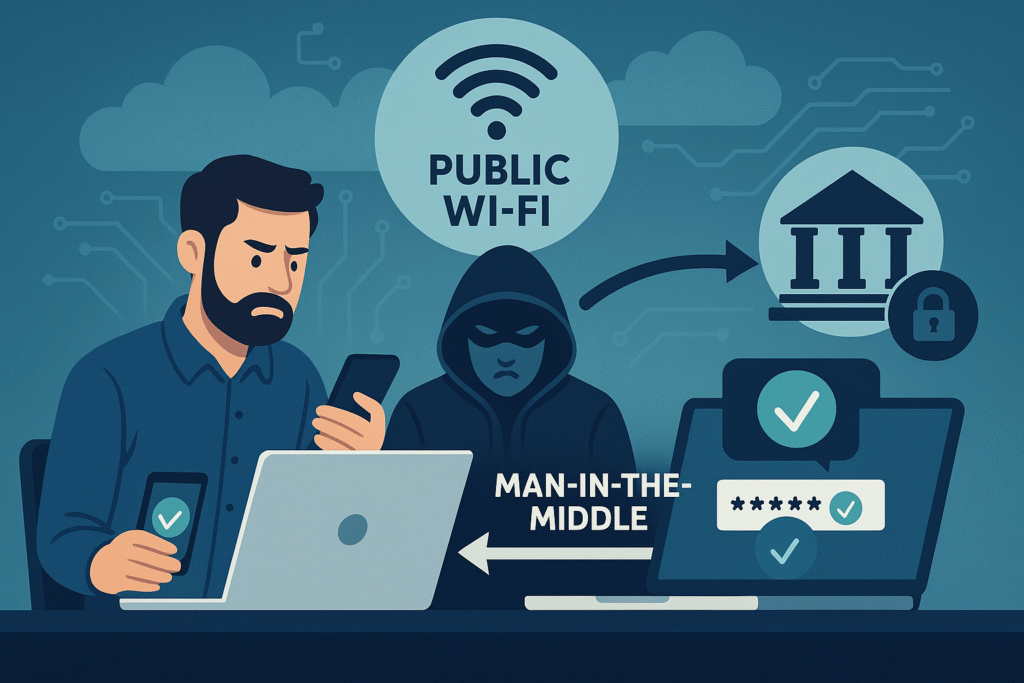
Small businesses often overlook a major security risk – their remote workers access sensitive company data through public Wi-Fi hotspots. A survey shows that 50% of people use Wi-Fi hotspots to conduct financial transactions. This creates substantial exposure for UK SMEs with remote staff.
Wi-Fi Severity
Unsecured public Wi-Fi usage poses a HIGH risk. Public networks transmit data as plain text, which makes information vulnerable to cybercriminals with simple interception tools. These connections expose businesses to sophisticated attacks like evil twin networks, man-in-the-middle attacks, and malware distribution. Remote workers who connect to company resources through these networks create direct paths to sensitive corporate data.
Wi-Fi Description
Your employees face several threats when they connect to public Wi-Fi at cafés, hotels, or airports:
- Data interception: Hackers capture packets with sensitive information, from viewing entire web pages to stealing documents and photos
- Malicious hotspots: Attackers set up deceptive networks that mimic legitimate Wi-Fi names to trick users
- Malware distribution: Unsecured connections let bad actors plant malicious software on devices
Paul Reynolds sees this vulnerability during SME security assessments and notes that “most businesses significantly underestimate how easily attackers can compromise devices through public networks.”
Wi-Fi Fix Priority
This fix needs URGENT attention. Business email compromise, data theft, account takeovers, and device infections can all result from unsecured Wi-Fi connections.
Wi-Fi Suggested Fix
Put these protections in place right away:
- Make VPN usage mandatory for all remote workers to create encrypted tunnels that protect data even on compromised networks
- Secure home Wi-Fi networks with WPA2 or WPA3 encryption
- Turn off file sharing on public networks
- Set up two-factor authentication for all business applications
- Train your team to check network authenticity and connect only to trusted sources
- Set up devices to block automatic connections to unknown networks
Lack of Patch Management Process
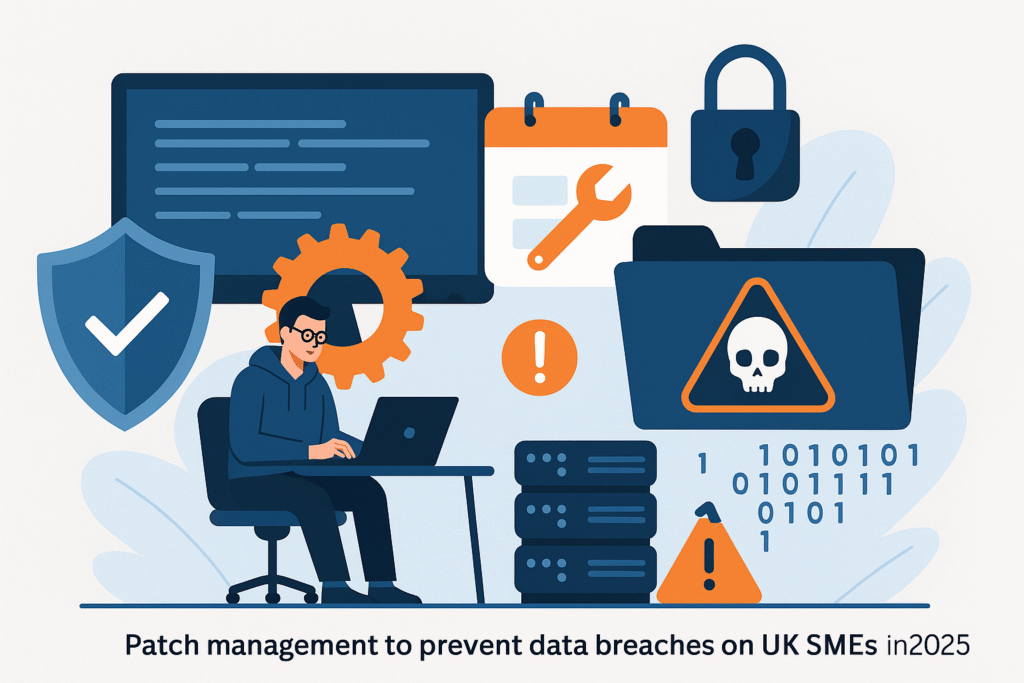
UK SMEs often overlook or poorly implement patch management, a vital security control. A Ponemon Institute study shows that unpatched systems caused 60% of data breaches. This common security mistake puts businesses at needless risk.
Understand why security patching still matters in 2026
Patch Management Severity
The impact of poor patch management is CRITICAL. Vendors create patches each year to fix thousands of IT security vulnerabilities. Cybercriminals target these weak spots, especially in SMEs that lack proper patching systems. Last year alone, unpatched flaws in common software led to 56% of ransomware attacks.
Patch Management Description
A systematic approach helps identify, test and apply software updates to fix security gaps. SMEs struggle with this vital task due to several challenges:
- Resource constraints: Small teams and tight budgets make regular patching hard
- Environment complexity: Multiple systems in different locations create patching hurdles
- Operational disruption concerns: System downtime fears delay crucial updates
- Frequency of updates: Small IT teams feel overwhelmed by constant patch releases
Paul Reynolds notes during SME security checks that “organisations often prioritise system uptime over security, creating dangerous windows of opportunity for attackers.”
Patch Management Fix Priority
This fix needs URGENT attention. Companies without structured patching become easy targets for malware, ransomware, and data breaches. Almost half of all cyberattacks target SMEs, mainly through unpatched systems.
Patch Management Suggested Fix
Start these key patch management steps now:
- List all systems that need updates in a complete asset inventory
- Set up clear patch rules with specific duties and deadlines
- Rank patches by how serious the risk is and how critical the system is
- Check patches work before rolling them out
- Look into tools that automate patch management
- Run regular scans to spot missing patches
- Keep records of all patches you apply
Small businesses can get automated patch management tools for just £1.59 per device monthly. This makes effective patch management both economical and available to everyone.
Misconfigured Microsoft 365 Security Settings
Microsoft 365 environments put UK SMEs at risk due to simple misconfigurations. Read how cloud misconfigurations quietly expose your environment. Attackers have shifted their focus in recent years. They now target vulnerabilities that stem from how administrators set up their tenants rather than Microsoft’s own security issues.
M365 Severity
Microsoft 365 misconfiguration severity ranks as HIGH. These setup errors have led to serious ground-level consequences. Companies have faced issues from fake executive emails to data leaks on the internet. A striking example occurred in 2021 when wrong Power Apps portal settings exposed 38 million records from both government and private organisations. The situation became worse in 2024 when wrong permission settings in Microsoft Power Pages exposed personal data of more than 1.1 million NHS workers.
M365 Description
Several common factors lead to Microsoft 365 misconfigurations:
- Complex integrations between on-premises and cloud systems
- Different departments controlling various parts of the environment
- Too much trust in default settings that favour ease of use over security
- Poor visibility into security status
These issues show up most often in specific areas. Exchange environments don’t deal very well with Domain-based Message Authentication, Reporting, and Conformance (DMARC). Companies also make mistakes when setting up Power Apps and Power Pages. They use anonymous roles incorrectly, forget to turn on table-level security, and misuse low-code tools.
M365 Fix Priority
This fix needs URGENT attention. About 80% of businesses keep taking Microsoft 365 for their work. This makes it a prime target for cyber threats like Account Takeover and Business Email Compromise. Ignoring these weak points can lead to data breaches, money losses, and business disruptions.
M365 Suggested Fix
Take these vital security steps right away:
- Check and strengthen inbound connectors in Exchange, especially in hybrid setups
- Double-check SPF, DKIM, and DMARC settings—don’t assume they work by default
- Set up better filtering and strict transport rules to block unauthorised traffic
- Lock down Power Platform with proper role-based access controls
- Check permissions often, watching out for anonymous or external users
- Run thorough setup checks on key services like Exchange, Teams, SharePoint, and Defender
Paul Reynolds shares his experience from SME security checks: “Organisations often assume Microsoft 365 is secure out of the box, but the default settings prioritise collaboration over security—creating dangerous blind spots for businesses without proper configuration oversight.”
No Logging or Monitoring of User Activity
Security monitoring and user activity logging create a vital defence layer that UK SMEs often miss completely. Discover why activity logging is essential during pen testing. This security gap leaves companies unable to spot potential break-ins until attackers have already caused damage.
Logging Severity
Poor user activity monitoring carries a HIGH severity rating. Systems without proper logs fail to catch security incidents for long periods. Security teams need monitoring to spot threats in IT systems, while good monitoring depends on balanced, reliable logs and device management. Log data helps teams pinpoint both attack sources and damage scope during breach investigations. We need multiple information sources that work together to catch intrusions successfully.
Logging Description
User activity monitoring tracks how people access and handle sensitive data in your systems. Most IT security teams can’t see these activities clearly, which makes them easy targets for insider threats or external attackers who get in. Host-based logs offer rich data streams that include file system events, running processes, and programme loads. Service logs from identity systems, mail servers and document storage also generate events that reveal signs of compromise.
Logging Fix Priority
This fix needs URGENT attention. Perfect logging solutions might not be possible due to budget limits or device restrictions. Notwithstanding that, you should focus on key questions that help spot potential breaches or security risks. Missing proper logs creates dangerous blind spots where attackers work unnoticed.
Logging Suggested Fix
Your business needs these key logging practises right away:
- Record device events including user actions, network traffic, login attempts and access to devices and services
- Analyse log data to spot and handle security events quickly
- Tell users clearly that you monitor their sessions
- Give privileged access only to users who truly need it
- Set up data protection rules with your monitoring system
- Update incident response plans based on what you learn from security events
Paul Reynolds shares his SME security assessment experience: “Logging isn’t just about compliance—it’s about giving your business the visibility needed to detect attackers before they can cause significant harm.”
Open Ports Exposed to the Internet
Unmanaged and open ports create major security gaps that attackers use to breach UK SMEs. Studies by Marsh McLennan show that organisations with exposed ports face a much higher risk of cyberattacks. Many businesses don’t notice this security weakness until they’ve already been compromised.
Open Ports Severity
The severity of exposed ports is HIGH. Bitsight’s research proves that organisations rated F for open ports face double the breach risk compared to A-rated companies. The Critical Security Controls list open ports as a major network risk. The devastating WannaCry ransomware attack that hit thousands of UK businesses spread through ports that were accidentally left open.
Open Ports Description
Ports act as virtual communication points where services exchange network information. Each port connects to specific services—port 80 handles web traffic (HTTP), port 22 manages SSH, and port 53 runs DNS. Cybercriminals frequently use port scanning as their go-to method to locate vulnerable servers.
Attackers who find open ports can:
- Spot running services and their weak points
- Check if security devices or firewalls exist
- Navigate through networks after gaining access
- Install malware or ransomware on critical systems
Open Ports Fix Priority
This fix needs URGENT attention. Each open port creates a small gateway into your organisation’s IT infrastructure. Attackers frequently target ports like 21 (FTP), 22 (SSH), 23 (Telnet), and 445 (SMB) because of their known vulnerabilities.
Open Ports Suggested Fix
Take these protective steps right away:
- Run regular port scans to check which ports remain exposed
- Shut down ports you don’t need—if a port lacks a clear purpose, close it
- Set up strong firewalls to manage visible ports and stop suspicious traffic
- Use network segmentation to reduce risk by creating isolated network sections
- Watch port status and network traffic to catch scanning attempts quickly
As Paul Reynolds often identifies during SME security assessments, “Most businesses have no idea which ports they’re exposing to the internet until after an attacker has already exploited them.”
No Data Loss Prevention (DLP) Controls
Data leakage poses a significant risk to UK small businesses. 85% of regulatory and compliance needs relate to protecting sensitive information. Small businesses handling customer details, financial records, and intellectual property face security gaps without proper Data Loss Prevention (DLP) solutions in 2026.
DLP Severity
Missing DLP controls have HIGH severity ratings. Organisations can’t identify and stop unauthorised sharing of sensitive information across their digital assets without DLP measures. Data breaches now cost businesses £4.35 million on average. DLP plays a vital role in any risk reduction strategy. These costs could force SMEs with limited resources to shut down.
DLP Description
DLP security solutions identify and prevent unsafe or inappropriate sharing, transfer, or use of sensitive data. These tools protect information in:
- On-premises systems
- Cloud-based locations
- Endpoint devices like mobiles and laptops
DLP solutions use AI and machine learning to detect suspicious activities by comparing content to predefined policies. Security experts say DLP doesn’t just respond to threats—it prevents them by monitoring data in use, in motion, and at rest.
DLP Fix Priority
This fix requires URGENT attention. CyberEdge Group’s report shows ransomware attacks target mid-sized businesses more frequently. Proactive protection matters now more than ever. Regulations like GDPR, HIPAA, and PCI-DSS require proper data protection measures. Non-compliance can result in heavy penalties.
DLP Suggested Fix
Paul Reynolds suggests these key DLP controls for SMEs:
- Get a full picture of sensitive data through risk assessment
- Set up technical controls including encryption, access restrictions, and data masking
- Create clear DLP policies that outline protected data types and security methods
- Add endpoint protection for devices accessing sensitive information
- Monitor and audit data activity regularly
- Train employees thoroughly on data protection practises
“Many SMEs overlook DLP until after a breach,” notes Paul Reynolds during security assessments. “Yet implementing basic DLP measures is often more affordable and straightforward than recovering from a data loss incident.”
Lack of Secure Configuration Baselines
Security misconfiguration vulnerabilities plague UK SMEs. A staggering over 20% of all data breaches stem from improper configuration settings. The cybersecurity world faces serious risks from insecure default configurations that create dangerous entry points for attackers.
Baseline Severity
Lacking secure configuration baselines carries a HIGH severity rating. Security teams find misconfigurations in 96% of internal penetration tests, making this vulnerability extremely common. Organisations can reduce vulnerabilities by 45% through monthly configuration audits. SMEs rarely implement these practises. The data shows 70% of breaches involve assets with misconfigured security settings.
Baseline Description
Secure configuration baselines set minimum security standards that systems need before deployment. Manufacturers typically configure default settings to be open and multifunctional. They value convenience over security. These default settings often include:
- Default administrative passwords and accounts
- Unnecessary open ports and services
- Excessive user permissions
- Disabled security features
Security experts warn that “Accepting the default settings without reviewing them can create serious security issues, allowing cyber attackers to gain easy access to your data”. Configuration drift poses increasing risks as systems gradually move away from secure settings across industries.
Baseline Fix Priority
This fix needs URGENT attention. Misconfigured infrastructure causes 80% of data breaches. Proper baselines play a critical role in reducing risks. Systems without secure configurations remain vulnerable to exploits targeting default settings.
Baseline Suggested Fix
Paul Reynolds suggests these crucial baseline practises:
- Create standardised, documented configuration templates for all systems
- Disable or remove unnecessary user accounts, features, and services
- Change all default passwords to strong, unique alternatives
- Use automated configuration management tools to detect drift
- Follow established frameworks like CIS Benchmarks or NIST guidelines
- Run regular configuration audits—quarterly for high-risk systems
“Most organisations focus on adding security tools while overlooking the fundamental security of their base configurations,” notes Paul Reynolds during SME security assessments. “Yet properly configured systems often prevent breaches more effectively than expensive security solutions added later.”
No Cloud Access Security Broker (CASB)

Image Source: Fortinet
Cloud security gaps create growing threats to UK SMEs. 29% of security incidents now happen in cloud environments. Attackers successfully target cloud assets in 21% of cases. Companies without a Cloud Access Security Broker (CASB) face dangerous blind spots as they move critical operations to the cloud.
CASB Severity
Missing CASB protection has a HIGH severity rating. Traditional security measures like firewalls don’t work well outside physical data centres. Remote work and Bring Your Own Device policies continue to expand. This growth leads to shadow IT—unauthorised app usage—which creates major security risks. Cloud data remains exposed to both internal and external threats, and IT teams often can’t even see these problems.
CASB Description
A CASB acts as a security policy enforcement point between company users and cloud service providers. It integrates multiple security policies from authentication to malware detection and protects both authorised and unauthorised applications. The four main CASB functions include:
- Visibility – gives detailed views of cloud service usage and shadow IT
- Data security – adds controls to protect sensitive information
- Threat protection – spots anomalies and potential security issues
- Compliance – handles regulatory requirements across cloud platforms
CASB Fix Priority
This fix needs URGENT attention. Cloud adoption keeps accelerating, and the shared responsibility model leaves specific security tasks to users. SMEs without CASB solutions struggle to spot risky cloud apps, maintain consistent security policies, or detect compromised accounts.
CASB Suggested Fix
Paul Reynolds suggests these implementation steps:
Start by choosing a CASB solution that fits your organisation’s size and needs. Set it up to find all cloud applications currently in use—both approved and unapproved. Next, evaluate each application’s risk level and create appropriate security policies. Last, add data protection controls with access restrictions and data loss prevention throughout your cloud environment.
Note that CASBs help your business extend security to the cloud while allowing safe, compliant use of essential cloud applications.
Insecure API Endpoints
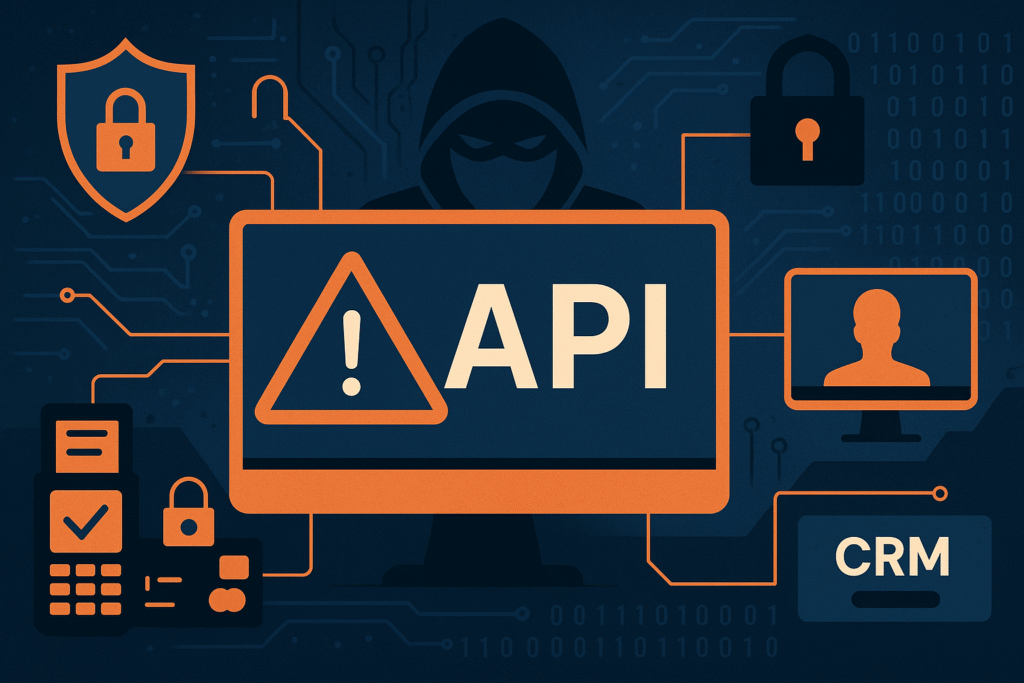
APIs play a vital role in business operations today. Small organisations use third-party services for payment processing and customer relationship management. UK SMEs face a growing threat from cybercriminals who target unsecured API endpoints in 2026.
Explore how APIs get exploited in supply chain attacks.
API Severity
The severity of unsecured API endpoints is HIGH. APIs without proper security measures create dangerous gateways. Attackers can access sensitive data, disrupt services, or take control of critical systems. These vulnerabilities cause financial losses, damage reputations, and trigger regulatory penalties – especially with GDPR. Most API breaches start with simple implementation flaws rather than complex attacks.
API Description
API vulnerabilities come from several security gaps:
- Inadequate authentication – APIs that don’t verify user identities properly let attackers gain unauthorised access by exploiting authentication weaknesses
- Broken object-level authorisation – APIs without proper access controls allow attackers to change object IDs and access unauthorised data
- Excessive data exposure – APIs give out more information than needed and expose sensitive data
- Lack of rate limiting – APIs without proper resource limits can be overwhelmed by excessive requests that cause denial-of-service
Paul Reynolds sees during SME security checks that “small businesses often implement APIs without fully understanding the security implications, creating vulnerabilities that attackers actively seek out.”
API Fix Priority
This fix needs URGENT attention. API vulnerabilities stand out among security challenges that small businesses face. They expose business-critical data directly to the internet. Cloud-based services make the attack surface bigger through APIs.
API Suggested Fix
Put these key protections in place right away:
- Add strong authentication and authorisation like OAuth for all API endpoints
- Check all input data to prevent injection attacks and maintain data integrity
- Set rate limits and throttling to stop abuse and reduce DDoS attacks
- Use encryption (HTTPS/TLS) for all API communications to keep data safe during transfer
- Test APIs regularly for vulnerabilities with automated tools and manual reviews
Concerned about emerging AI-driven attack vectors? Explore our AI Security Consultant services for future-ready protection.
No Separation of Duties in Admin Roles

UK SMEs face a simple yet critical security risk – their administrator roles lack proper separation of duties (SoD). The cybersecurity principle of SoD states that “no user should be given enough privileges to misuse the system on their own”. This control protects against internal abuse and stops malicious actors from exploiting the system to dangerous levels.
Follow these access control best practices to enforce SoD.
SoD Severity
Inadequate separation of duties carries a HIGH severity rating. Security threats emerge because “too many employees have too much persistent access”. This power concentration creates opportunities for security incidents, both intentional and accidental. A single compromised admin account without proper separation can devastate systems – from data breaches to complete takeovers.
SoD Description
SoD problems happen when someone can perform multiple critical tasks without any oversight. To name just one example, an admin who creates user accounts and controls access permissions could set up unauthorised accounts with high-level privileges. These situations commonly arise when:
- A single admin controls all user permissions
- One person handles both implementation and approval of system changes
- Someone can access and modify sensitive data alone
- IT teams get too many admin rights across systems
Paul Reynolds often notes during SME security checks that “The convenience of having one person handle all admin tasks often leads to catastrophic security vulnerabilities that remain hidden until exploited.”
SoD Fix Priority
This fix needs URGENT attention. Role separation reduces attack surfaces and limits “traversing” (lateral movement) that happens with compromised credentials. The solution starts with identifying roles that truly need elevated privileges and setting up a role-based access control (RBAC) model.
SoD Suggested Fix
Put these vital SoD practises in place:
- Split user account management from permission assignments
- Create independent change management so people can’t approve their own changes
- Give elevated privileges only when jobs absolutely need them
- Check and verify admin roles regularly, especially after staff changes
- Set up a just-in-time (JIT) entitlement system for temporary elevated access
- Get senior management’s documented approval for critical system changes
Lack of Encryption for Sensitive Data
UK businesses often overlook encryption as a basic security measure. Data breaches of unencrypted sensitive information make headlines frequently. The current digital world makes unencrypted critical data look like “driving a brand-new Ferrari without car insurance”.
Encryption Severity
Inadequate encryption severity remains CRITICAL. Unprotected sensitive data leads to identity theft, fraud, and financial losses that affect both employees and customers. Businesses that store unencrypted data face substantially higher breach risks. The average cost reaches £3.53 million globally. GDPR violations of unprotected personal data can result in fines up to 4% of global annual turnover. These fines create substantial financial exposure for SMEs.
Encryption Description
Encryption changes readable data into an unreadable format that needs a specific key to decode. Data protection happens in two critical states:
- Data at rest – Information stored on devices, servers, or cloud storage
- Data in transit – Information moving between devices or networks
UK GDPR requires appropriate technical measures to process personal information securely. Encryption serves as an example of such measures. We used encryption as protection even if other security controls fail. This ensures data stays unusable to unauthorised parties even after breaches.
Encryption Fix Priority
This fix needs URGENT attention. Encryption solutions are accessible to more people and easy to implement. SMEs can find many budget-friendly options. The cost of implementing encryption (approximately £186.63 per device) is no match for potential breach costs and regulatory penalties.
Encryption Suggested Fix
Paul Reynolds suggests these critical encryption measures:
- Data classification based on sensitivity levels determines appropriate encryption needs
- Storage encryption implementation on all devices includes laptops, smartphones, and removable media
- Strong encryption algorithms and appropriate key lengths defined in your policy work best
- Encrypted communications protocols like TLS 1.3 protect data in transit
- Proper key management procedures separate keys from data that need regular rotation
- Staff training focuses on encryption technologies’ use and importance
No Regular Vulnerability Scanning

UK SMEs often skip regular vulnerability scanning, a key security practise. Learn how credentialed scans help meet Cyber Essentials Plus. This creates a dangerous blind spot. Companies don’t know about their weak points until after someone breaks in.
Vuln Scan Severity
Missing regular vulnerability scans is CRITICAL. These scans are the foundations of good security that help spot weaknesses before attackers do. The numbers tell a clear story – 60% of data breaches happen because companies don’t patch known vulnerabilities. Regular scans help businesses spot these issues early and cut down their risk.
Vuln Scan Description
A vulnerability scan looks for security weak spots in systems and software. The process works through these steps:
- Making a detailed list of assets
- Scanning the network
- Looking up findings in vulnerability databases
- Finding and sorting system weaknesses
- Creating practical reports
Good vulnerability scans can spot many security gaps. These include wrong system settings, old software, weak passwords, and exposed ports or services. Companies should rank vulnerabilities by how dangerous they are. The Common Vulnerability Scoring System (CVSS) helps with this by giving scores from 0-10.
Vuln Scan Fix Priority
This needs URGENT attention. Paul Reynolds puts it well during SME security checks: “Without regular vulnerability scanning, you’re essentially operating with a blindfold on—unaware of the security holes attackers can easily see.” Regular scans give you early warnings and time to fix issues before attackers find them.
Vuln Scan Suggested Fix
Here’s what you need to do:
- Set up a proper scanning system with clear steps
- Run scans regularly – at least monthly for important systems
- Pick different scanning tools to get full coverage
- Rank issues based on how serious they are and how they affect business
- Create a clear fix-it plan with owners and deadlines
No Cyber Essentials Certification
UK SMEs miss a great chance when they skip Cyber Essentials certification. Statistics show businesses that implement these basic controls make 92% fewer insurance claims. This government-backed scheme gives small businesses a practical framework to shield against common cyber threats.
Cyber Essentials Severity
The lack of Cyber Essentials certification rates as MEDIUM severity. This certification gap shows a strategic weakness rather than an immediate tactical vulnerability. Insurance data proves that organisations with Cyber Essentials are 92% less likely to file cyber insurance claims compared to those without. Companies without certification might lack basic security measures and stay exposed to simple attacks.
Cyber Essentials Description
Cyber Essentials is a UK government-backed certification scheme built around five technical controls:
- Secure configuration – Setting up computers to minimise entry points
- User access control – Controlling data and service access levels
- Malware protection – Identifying and neutralising malicious software
- Security update management – Preventing exploitation of software vulnerabilities
- Firewalls – Creating security philtres between the internet and networks
The scheme helps organisations shield themselves against common cyber attacks. Small and medium enterprises with limited IT expertise will find Cyber Essentials straightforward and affordable compared to complex security frameworks.
Cyber Essentials Fix Priority
This fix rates as RECOMMENDED. The certification process gives companies a great way to get a systematic review and boost their security measures. Companies with valid Cyber Essentials certificates can bid for government contracts that deal with financial or personal data.
Cyber Essentials Suggested Fix
Paul Reynolds suggests these steps:
Start by defining your certification scope. Your entire IT infrastructure should be covered for maximum protection. Run a complete gap analysis against the five controls and document all weaknesses. Put the right security measures in place to address identified gaps. Good asset management lays the foundation to meet all five controls. The final step involves completing and submitting the self-assessment questionnaire for certification.
No Business Continuity or Disaster Recovery Plan

Image Source: Box UK
UK SMEs face a dangerous lack of preparation when it comes to disaster recovery and business continuity planning. Studies paint a grim picture – 40% of small businesses never reopen after a disaster strikes. The outlook gets worse. Another 25% of businesses that do reopen end up failing within a year.
BCP Severity
The lack of a business continuity plan rates as CRITICAL. The numbers tell the story – just 20-30% of SMEs have their business continuity plans written down, even though they face many potential disruptions. Companies without BCPs struggle with chaos, delays, and heavy losses that often shut them down completely. The stakes are high. 90% of small businesses that can’t restart within five days of a disaster end up failing within a year.
BCP Description
A business continuity plan shows how a business keeps running when unexpected problems hit. While disaster recovery plans focus on IT systems, BCPs look at the whole organisation. A good BCP needs several building blocks: risk assessment, communication protocols, backup work plans, supply chain management, emergency steps, and regular reviews.
BCP Fix Priority
This needs URGENT attention. Small businesses with tight cash reserves can’t afford downtime. They need to put a BCP in place right away. Without proper planning, they risk major problems with operations, finances, and reputation.
BCP Suggested Fix
Paul Reynolds suggests these vital BCP steps:
- Put together a dedicated business continuity planning team
- Get a full picture of risks and business impacts
- Build an IT disaster recovery plan as part of your BCP
- Set up clear crisis communication channels for everyone involved
- Write down backup work plans and emergency procedures
- Check and update your plan every year at minimum
“Many SMEs view business continuity planning as a luxury,” notes Paul during security assessments. “Yet it’s often the difference between surviving a crisis and closing your doors permanently.”
Comparison Table
| Security Misconfiguration | Severity | Description | Fix Priority | Key Statistics | Suggested Fix |
| Untrained Staff on Phishing | HIGH | Staff lacks awareness to spot suspicious communications | URGENT | 85% of UK businesses targeted by email scams; 31.4% employees likely to fall for phishing | Implement regular phishing awareness training with simulated campaigns |
| Reused/Weak Passwords | HIGH | Using similar credentials on multiple platforms | URGENT | 53% of people use similar passwords; 81% of breaches involve weak passwords | Deploy enterprise password managers and enforce minimum 16-character length |
| No MFA on Email/Cloud | CRITICAL | Critical systems lack multi-factor authentication | URGENT | Blocks 99.9% of automated cyberattacks | Implement MFA across all critical systems, prioritising email and cloud services |
| Unsecured Public Wi-Fi | HIGH | Remote workers connect to company data through unsecured networks | URGENT | 50% of people use Wi-Fi hotspots for financial transactions | Require VPN usage and implement strict network security policies |
| Lack of Patch Management | CRITICAL | Security updates lack systematic application process | URGENT | 60% of breaches occurred due to missing patches | Create asset inventory and formal patch management policy |
| Misconfigured M365 | HIGH | Microsoft 365 environment has improper security settings | URGENT | 80% of businesses rely on M365 for productivity | Audit and harden inbound connectors, verify SPF/DKIM/DMARC |
| No Logging/Monitoring | HIGH | User activity lacks tracking and analysis | URGENT | Not mentioned | Set up logging across devices and services |
| Open Ports | HIGH | Internet access through unmanaged ports | URGENT | Organisations with open ports 2x more likely to experience breach | Close unnecessary ports and implement strong firewalls |
| No DLP Controls | HIGH | Missing Data Loss Prevention measures | URGENT | 85% of regulatory needs relate to protecting sensitive information | Deploy technical controls including encryption and access restrictions |
| No Secure Baselines | HIGH | Standardised security configurations are missing | URGENT | 96% of internal penetration tests find misconfigurations | Create standardised configuration templates |
| No CASB | HIGH | Cloud Access Security Broker protection is missing | URGENT | 29% of security incidents involve cloud environments | Deploy CASB solution matching organisation size |
| Insecure API Endpoints | HIGH | API security needs improvement | URGENT | Not mentioned | Implement strong authentication and authorisation mechanisms |
| No Admin Role Separation | HIGH | Administrative duties lack proper segregation | URGENT | Not mentioned | Separate user account management from permission assignments |
| No Data Encryption | CRITICAL | Sensitive information lacks encryption | URGENT | Average breach cost £3.53 million globally | Implement storage encryption on all devices |
| No Vulnerability Scanning | CRITICAL | Regular security assessments are missing | URGENT | 60% of breaches due to unpatched known vulnerabilities | Schedule consistent monthly scans for critical systems |
| No Cyber Essentials | MEDIUM | UK government-backed certification is missing | RECOMMENDED | 92% fewer insurance claims with certification | Define certification scope and conduct gap analysis |
| No Business Continuity | CRITICAL | Disaster recovery planning is missing | URGENT | 40% of small businesses never reopen after disaster | Establish dedicated BCP team and conduct risk assessment |
Conclusion
UK SMEs face a clear danger from security misconfigurations in today’s faster changing threat landscape. This piece looks at the most dangerous security gaps that exploit businesses across Britain. British organisations continue to operate with these critical weaknesses unresolved, even though these vulnerabilities need immediate attention.
The stakes couldn’t be higher financially. Cybersecurity has become an existential concern rather than just a technical issue, with average breach costs approaching £1,000 per incident and 40% of affected small businesses never reopening after a major security event. On top of that, regulatory consequences under frameworks like GDPR add another layer of risk that could result in fines up to 4% of annual turnover.
The most compelling evidence points to simple, fundamental security measures preventing most successful attacks. To cite an instance, MFA blocks 99.9% of automated attempts, while proper phishing awareness training can reduce click rates from over 30% to less than 5%. Organisations that conduct monthly configuration audits experience 45% fewer vulnerabilities overall.
The stark reality shows cybercriminals target SMEs specifically because they expect to find these exact misconfigurations. So, addressing even half the vulnerabilities detailed here would strengthen your security posture significantly against common attack vectors.
Note that security isn’t a one-time project but an ongoing process that needs regular assessment and improvement. A systematic approach to patch management, access control, data protection, and disaster recovery creates defence layers that work together to protect your business assets.
UK SMEs with limited resources must prioritise their actions. The critical misconfigurations marked “urgent” need immediate attention – especially when you have simple hygiene like password management, MFA implementation, and staff training. Medium-severity issues can follow while developing longer-term security strategies.
Strong security starts with awareness. Your understanding of these dangerous misconfigurations now enables you to protect your business before preventable attacks occur.
To tackle the security gaps outlined above, we recommend speaking with Paul Reynolds, a leading Cyber Security Consultant in the UK.
Key Takeaways
These critical security gaps are actively exploited by cybercriminals targeting UK SMEs, with simple fixes preventing the majority of successful attacks.
• Human error drives most breaches – 85% of UK businesses face phishing attacks, but proper training reduces click rates from 31% to under 5%
• Basic authentication failures create massive exposure – Multi-factor authentication blocks 99.9% of automated attacks, yet 54% of SMEs still lack this protection
• Unpatched systems remain prime targets – 60% of data breaches exploit known vulnerabilities that already have available patches
• Default configurations spell disaster – 96% of penetration tests find misconfigurations, with proper baselines reducing vulnerabilities by 45%
• Financial consequences are devastating – Average breach costs £1,000 per incident, with 40% of affected small businesses never reopening
The evidence is clear: implementing fundamental security measures like MFA, staff training, patch management, and secure configurations provides robust protection against the attack methods cybercriminals use most frequently. For resource-constrained SMEs, prioritising these basic controls delivers maximum security impact whilst remaining both affordable and achievable.
FAQs
Q1. What are the most critical security misconfigurations for UK SMEs to address? The most critical misconfigurations include lack of multi-factor authentication, untrained staff vulnerable to phishing, weak password practises, absence of patch management, and misconfigured cloud settings. Addressing these can significantly improve an SME’s security posture.
Q2. How can small businesses implement effective phishing awareness training? Small businesses should conduct regular phishing simulations, provide interactive training modules covering various phishing scenarios, establish clear reporting procedures for suspicious communications, and offer frequent updates on emerging threats. This approach can reduce click rates on phishing emails from over 30% to under 5%.
Q3. Why is multi-factor authentication (MFA) so important for SMEs? MFA is crucial because it blocks over 99.9% of automated cyberattacks. It adds an extra layer of security beyond passwords, making it significantly harder for attackers to gain unauthorised access to accounts, even if passwords are compromised.
Q4. What are the financial risks of poor cybersecurity for UK SMEs? The financial risks are substantial. The average cost of a cybersecurity breach for UK SMEs is around £1,000 per incident. More alarmingly, 40% of small businesses never reopen after experiencing a major security event, highlighting the potentially devastating impact of poor cybersecurity.
Q5. How often should UK SMEs conduct vulnerability scans? UK SMEs should conduct vulnerability scans at least monthly for critical systems. Regular scanning helps identify weaknesses before they can be exploited by attackers. This proactive approach can significantly reduce the risk of successful cyberattacks and data breaches.
